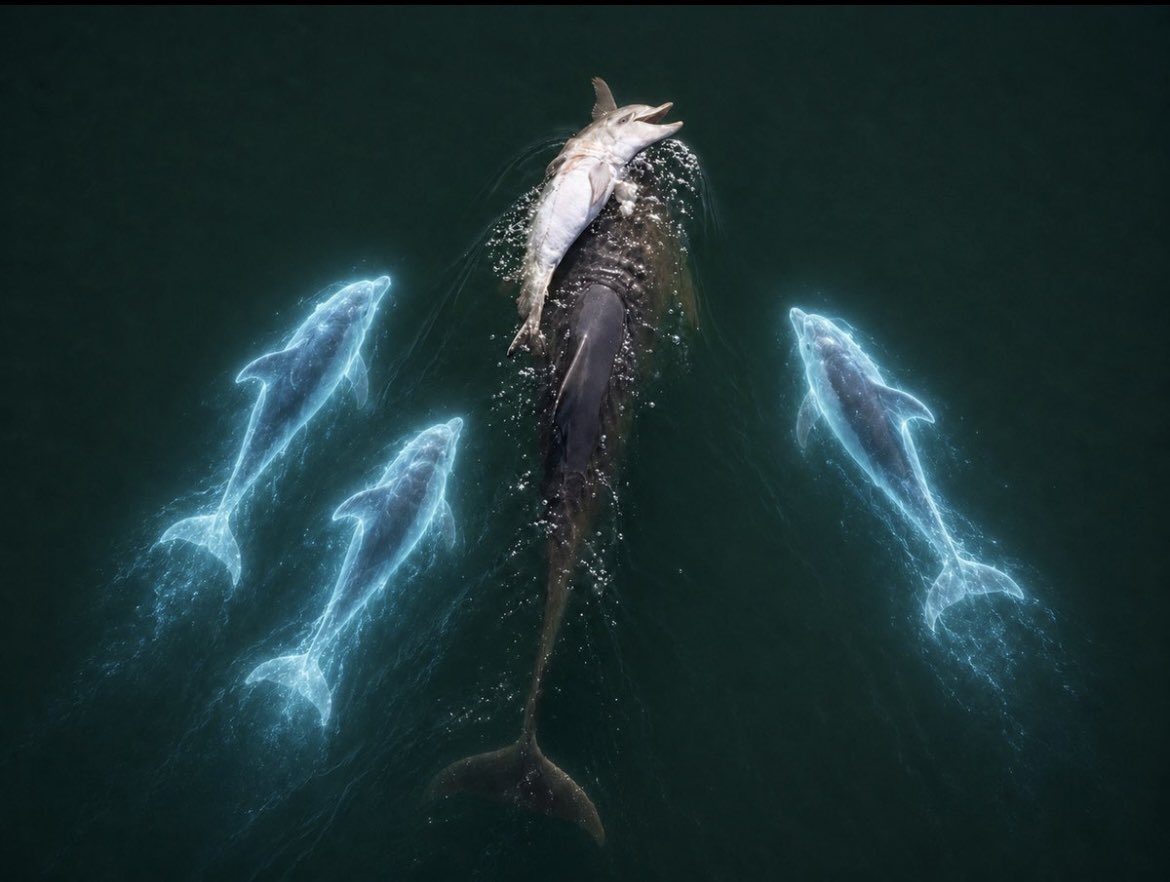
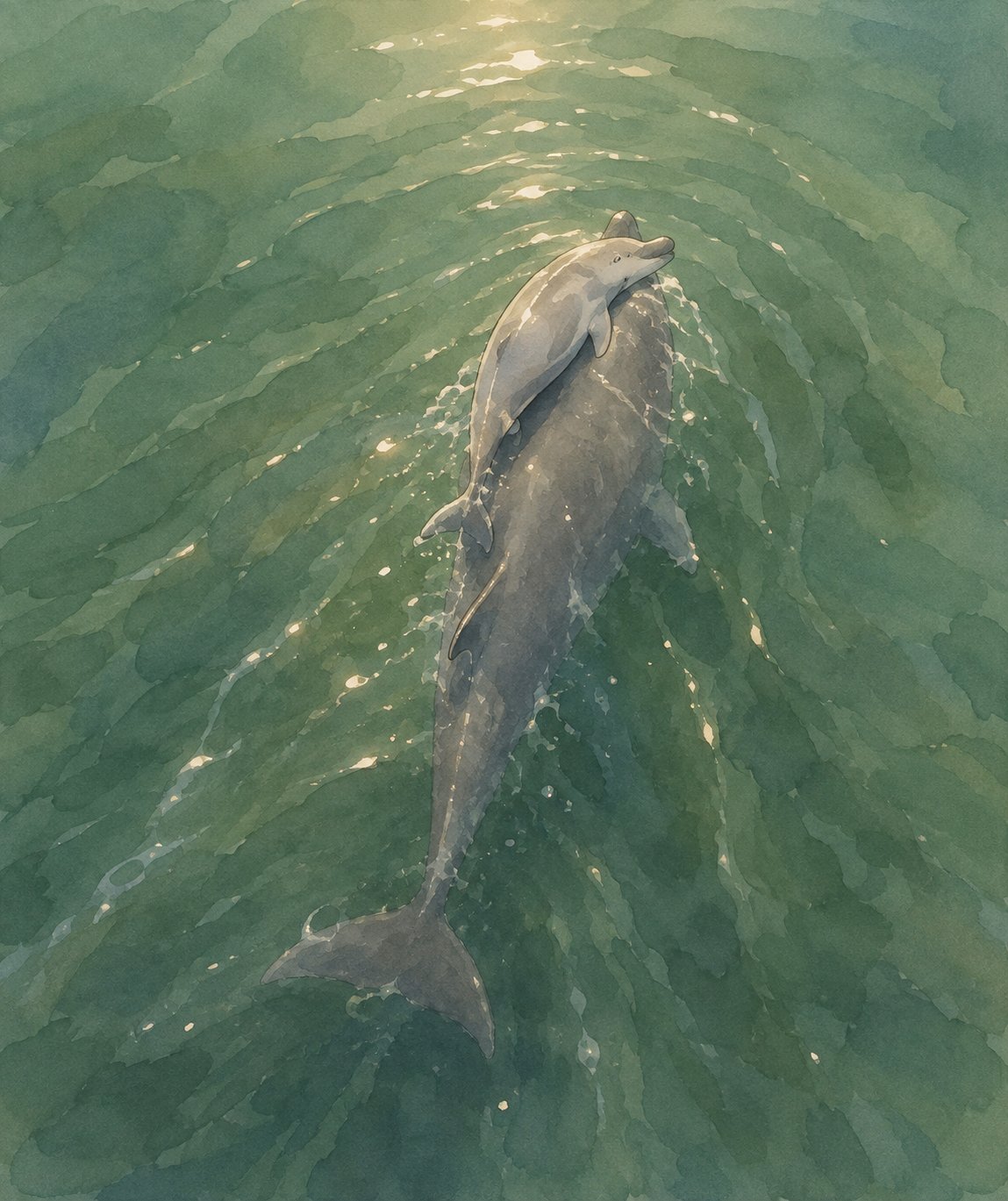
In August 2026, drone footage captured off the coast of Western Australia stopped marine scientists — and millions of viewers around the world — in their tracks. A wild bottlenose dolphin affectionately named Fraggle was filmed carrying her deceased two-week-old calf through the Indian Ocean.
For six consecutive days, Fraggle used her rostrum to repeatedly lift the calf to the surface whenever its small body began to sink. She had already lost four other calves. Rather than wandering alone in her exhaustion, her entire pod of 14 dolphins swam alongside her, hovering nearby in a quiet display of social solidarity.
01
The post that broke millions of hearts
The footage originated from Geographe Marine Research, an Australian non-profit conservation group in Western Australia. When GMR shared the raw video it rapidly went viral, passing 27 million views as people across the globe connected with Fraggle's visible grief.
Researchers had been monitoring the newborn after noticing its unusually high respiratory rate during a harsh winter birth. When the calf succumbed, GMR's aerial drone captured Fraggle's refusal to let go — balancing the tiny body on her rostrum to lift it toward the air, over and over again.
In scientific literature, Fraggle's actions are classified as epimeletic behaviour — a formal term for nurturant care given to a distressed or deceased companion. But clinical terms fail to capture the sheer physical sacrifice required to mourn at sea.
Starvation
While lifting her calf, Fraggle could not hunt. She chose hunger over letting go.
Exhaustion beyond measure
Pushing a dead weight breaks the sleek, hydrodynamic shape dolphins rely on to glide. Every stroke of her tail required double the effort, burning through vital reserves as her own strength ebbed away.